Why focus keeps failing you, and the four-layer framework that supports your brain.
What Makes a Workspace ADHD-Friendly?
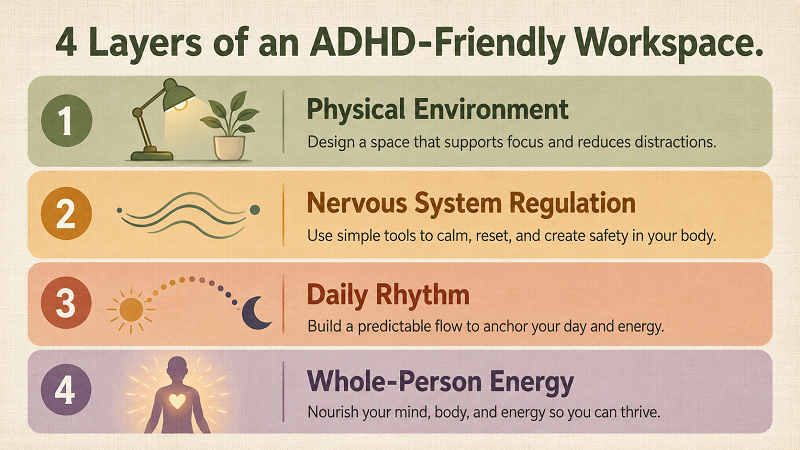
An ADHD-friendly workspace may help reduce sensory overload, build environmental predictability, and support nervous system regulation before asking the brain to focus. The four key layers are:
- Physical environment (lighting, sound, visual clutter)
- Nervous system regulation (grounding practices, herbal support)
- Daily rhythm (transition rituals, energy-based scheduling)
- Whole-person energy (self-trust, rest, mindfulness without force)
Key Takeaway:
- An ADHD-friendly workspace should reduce unnecessary sensory and organizational demands rather than relying on willpower alone. Clear visual cues, simplified surroundings, predictable routines, and accessible tools can make it easier to begin tasks and maintain focus.
- Nervous system regulation can complement practical workspace changes. Short pauses, intentional breathing, movement, sensory supports, and transitions between tasks may help create a calmer environment and make it easier to return attention to the task at hand.
- The most effective ADHD workspace is personalized. Consider factors such as lighting, noise, clutter, seating, screen setup, movement needs, and the type of work you do, then experiment with one change at a time to identify what improves focus and reduces overwhelm.
- Workspace strategies are supportive tools, not a substitute for ADHD assessment or treatment. If attention difficulties, executive-function challenges, or emotional overwhelm significantly interfere with daily life, consider working with an appropriately qualified healthcare or mental health professional.
Bottom Line: An ADHD-friendly workspace works best when it supports the way your attention and energy actually function. Combining a low-friction environment with personalized sensory, movement, and regulation strategies can make focused work easier and more sustainable.
Your workspace was never built for a brain like yours. And that is not a personal failure.
Picture this. You sit down to work. The overhead light is slightly too bright. Your desk has three things you meant to handle last week. Your phone lights up twice before you open your laptop. Seven tabs are still open from yesterday, each one a thought you never finished. You take a breath, try to settle in, and four minutes later your attention is completely somewhere else.
You tell yourself you need more discipline. A better system. More willpower.
But what if the environment itself is the problem?
Mainstream productivity advice was largely built around neurotypical attention patterns: linear focus, silent spaces, rigid scheduling, constant output. For many ADHD brains, that framework does not just fall short. It can contribute to dysregulating the nervous system, stack invisible sensory pressure, and turn an ordinary workday into an endurance test. ADHD is a neurobiological condition, not a discipline deficit, and the environments most of us work in were never designed with that in mind.
This article walks you through a practical, whole-person framework for designing an ADHD workspace and daily rhythm that works with your nervous system, not against it. We are covering four layers: your physical environment, nervous system regulation, daily rhythm, and whole-person energy. Sustainable focus asks for all four working together.
Your journey. Your pace. Your wellness.
Why Traditional Productivity Advice Often Fails ADHD Brains
ADHD Is Not Just About Attention
Most people frame ADHD as a focus problem. The reality is more layered, and more physical, than that.
ADHD involves differences in executive functioning: task initiation, working memory, emotional regulation, and time perception. It also shapes how the nervous system processes sensory input and shifts between cognitive tasks. Research consistently shows that ADHD reflects neurobiological differences, not personal weakness. When a workspace does not account for these realities, even minor environmental factors compound into significant cognitive friction; the brain may spend more of its available energy trying to regulate itself. Focus can then become secondary.
Overstimulation Is Not a Willpower Problem
Sensory input accumulates. A flickering light, background conversation, an uncomfortable chair, an overloaded to-do list: none of these seem significant in isolation. Together, across hours, they can push a nervous system that is already working hard toward overload.
ADHD-focused publications like ADDitude describe sensory processing differences and heightened sensory sensitivity in many people with ADHD. For some people with ADHD, sensory input may feel more intense or harder to filter, making environmental input harder to ignore than neurotypical systems might. What reads as background noise to some registers as foreground stimulation for others.
This is not a weakness. It is wiring. The solution is not more willpower; it is an environment designed to reduce unnecessary sensory load and lower the likelihood of overload before it ever begins.
The Hidden Harm of Perfect Productivity Culture
There is a particular kind of damage in productivity content that presents rigid morning routines, aesthetic workspaces, and uninterrupted focus blocks as universal standards.
For ADHD brains, many of these systems prioritize performance over nervous system accessibility. They demand consistent output from brains that operate in nonlinear energy patterns. They reward the output and erase the cost.
If you have tried these systems and blamed yourself when they did not hold, that blame belongs elsewhere. The system was not designed for your nervous system. You were not designed to fail. You were given the wrong map.
What Does Sensory Overload Actually Feel Like?
Sensory overload happens when the brain receives more input than it can comfortably process. For some people with neurospicy or ADHD brains, this threshold is often reached more quickly, especially in environments with multiple competing stimuli.
Common signs may look like:
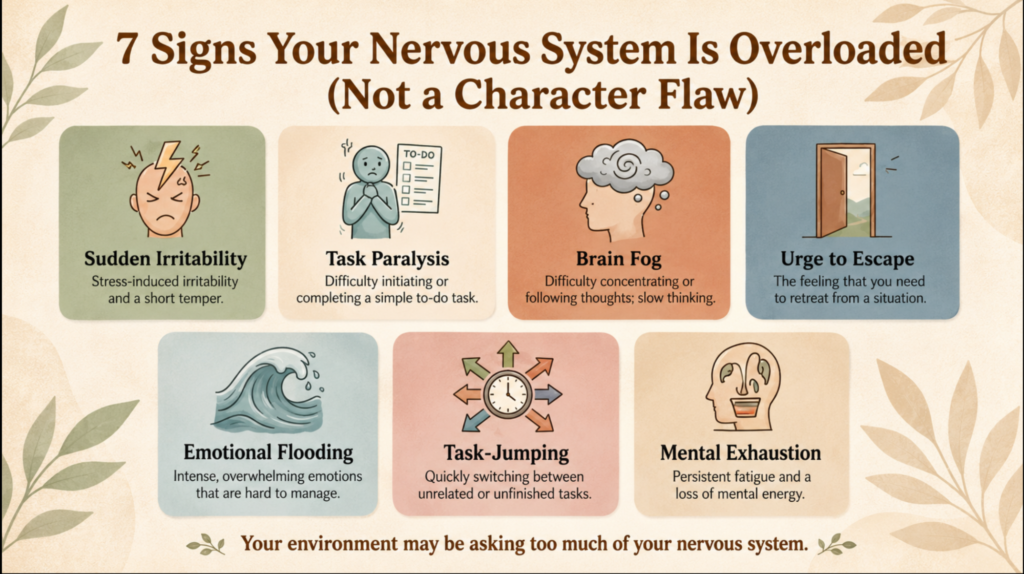
- Sudden irritability that feels out of proportion to what is happening
- Task paralysis: staring at something you want to do but cannot begin
- Brain fog and difficulty completing simple decisions or sentences
- Emotional flooding during a minor inconvenience
- Jumping between tasks without finishing any
- Mental exhaustion after what should have been a light morning
- A strong pull to escape, hide, or shut down entirely
The most important thing to understand: sensory overload often begins long before you consciously notice it. By the time you feel the wall, your nervous system has been accumulating input for more time than you may have realized. Designing your environment with this in mind means building support before overload hits, not scrambling to recover once it does.
The First Layer: Designing an ADHD-Supportive Physical Workspace
Lighting, Sound, and Visual Clutter
These three environmental factors are the common hidden contributors to sensory overload in a work setting. They are also the most adjustable.
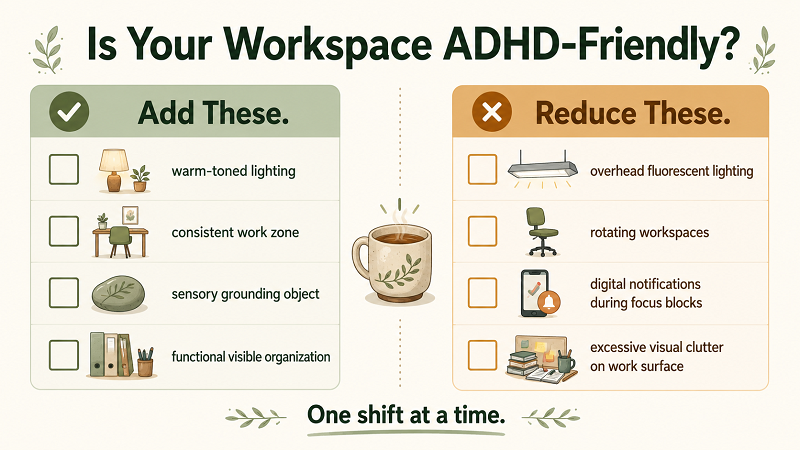
- Lighting: Harsh overhead fluorescent lighting may increase stress activation for sensory-sensitive brains. Warm, natural, or diffused light tends to be easier for sensory-sensitive brains to sustain. Work near a window when possible, or use a warm-toned lamp.
- Sound: Some ADHD brains need near-complete quiet. Many others focus better with consistent low-stakes background sound: brown noise, nature sounds, or lo-fi music without lyrics. There is no universal answer; experiment and trust what your nervous system tells you.
- Visual clutter: Even objects you are not consciously looking at create low-grade sensory input. A desk with many items in view keeps the brain in a low-level scanning state. Reducing what is visible during work time, even by turning away from a cluttered shelf, can meaningfully lower sensory load.
Why Pinterest Minimalism Does Not Work for Everyone
A contrarian truth: a workspace can look perfectly minimalist and still feel neurologically chaotic.
For ADHD brains, object permanence often works differently. Putting things away can mean they effectively disappear, leading to missed tasks, lost items, and increased cognitive load. Functional visibility matters. If seeing your planner open means you use it, leave it open. If having your tea on the counter means you actually pause to drink it, that cup belongs on the counter.
Creating Environmental Anchors
ADHD coaches and clinicians consistently observe that the brain regulates more easily in predictable spaces. A designated work zone, even just a corner of a shared room, trains the nervous system to associate that space with a cognitive state.
This works through consistent object placement, consistent lighting, and consistent sensory cues. Over time, simply entering that space can become a cue for your brain to focus. You are building a conditioned environment, not just an aesthetic.
Sensory Grounding Objects and Rituals
Take a breath right now. Notice where your body holds tension. Notice what is under your hands.
Sensory grounding objects are physical anchors that can help bring the nervous system back to the present moment. For ADHD brains, these can become regulatory tools, not indulgences:
- A textured object to hold during demanding tasks
- Calming scents like lavender or chamomile near the workspace
- A warm mug of herbal tea as a ritualized pause between focus blocks
- A lighting or music change to signal a transition
- A small fidget tool that gives the hands something to do while the mind focuses
Brewing a cup from LMH’s chakra and calm blends collection is a full-body sensory experience: warmth, scent, texture, and taste working together to create an intentional sensory pause may help to interrupt the overstimulation cycle. Ancient wisdom, modern application.
How Does Routine Support ADHD Focus Without Feeling Restrictive?
A routine does not have to be a rigid schedule to work. For ADHD brains, the goal is structure that guides rather than confines: a container flexible enough to hold different energy levels on different days.
The key distinction is rhythm over rigidity. A rhythm adapts. A rigid schedule punishes any deviation. ADHD routines can work well when built around consistent transitions and anchors rather than fixed minute-by-minute blocks.
This also means being honest about when your energy actually shows up. Many ADHD brains have peak cognitive windows that do not fall at 9 AM. Designing your day around when you genuinely have access to focused energy is not laziness; it is self-awareness. The shift from a survival mindset to genuine thriving often starts exactly here.
Transition Rituals Matter More Than Most People Realize
ADHD brains often struggle with transitions: shifting from one task to another, ending a hyperfocus session, beginning a new block. Transition rituals can help by giving the nervous system a cue, a bridge between states:
- Brewing a cup of tea before beginning work
- Two minutes before switching tasks
- Closing all tabs from a previous work block before opening anything new
- Changing the lighting or music when shifting contexts
- A one-sentence voice memo capturing your last thought before stepping away
These do not have to be elaborate. They have to be consistent. Consistency is the signal.
The Nervous System Layer: Regulate First, Focus Second
Focus becomes more accessible when the nervous system feels safe.
You can have a beautiful workspace, ideal lighting, and a thoughtful routine on paper, and if your nervous system is dysregulated when you sit down, those supports may not function as well as you intend. Regulation comes first. Focus follows.
What Dysregulation Looks Like During an ADHD Workday
Nervous system dysregulation does not always look like a meltdown. More often it looks like:
- Doomscrolling for 45 minutes when you have a deadline you actually care about
- Task paralysis: staring at something you understand and want to do but cannot begin
- Urgency spirals where everything feels catastrophic at once
- Emotional flooding during a minor inconvenience
- Crashing hard after a hyperfocus session
- Avoidance cycles that feel more powerful than reason
These are not character defects. They may be signs that your nervous system is carrying more than it can comfortably manage in that moment.
Five-Minute Grounding Practices for ADHD Brains
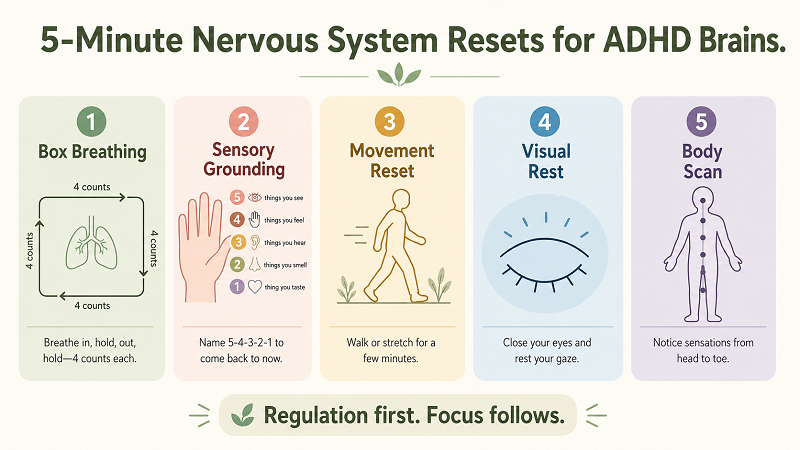
Shorter and more frequent is almost always more effective than longer and infrequent. Practices that may offer nervous system support in five minutes or less:
- Box breathing: Inhale four counts, hold four, exhale four, hold four. Repeat three to five times if this is comfortable for you.
- Sensory grounding: Name five things you can see, four you can touch, three you can hear, two you can smell, one you can taste.
- Movement reset: A two-minute walk, shoulder rolls, or shaking out the hands.Physical movement may help shift physical tension and support regulation..
- Visual rest: Close your eyes for sixty seconds, or shift your gaze to a single still object and let it soften.
- Body scan: Check in from crown to feet. Where is tension held? Where can you release it slightly?
For deeper support with embracing your neurodivergent brain, that article offers a grounded place to continue.
Herbal Support and Sensory Rituals for Sustained Calm
Plant allies have been used in traditional wellness practices for centuries. Certain herbs have long been used in functional botanical blends designed to support calm grounding and everyday well being.
Chamomile, oat straw, lavender, and botanical herbs like moringa are among those traditionally used to support rest, nourishment, and relaxation. At LMH Custom Teas and Herbs, blends containing botanicals traditionally used in calming or grounding rituals such as rest and relax chakra blend and this calming focus support chakra blend offer a layered sensory ritual: warmth, scent, and function in the same cup. Some research suggests herbs have been studied for potential calming or relaxation-related effects; consult your healthcare provider before adding herbal support if you take medications.
The act of brewing and holding that cup is itself a can become a grounding practice. It can interrupt the digital spiral and create a moment to bring awareness inward. Life is better with tea.
What Should an ADHD-Friendly Daily Routine Actually Look Like?
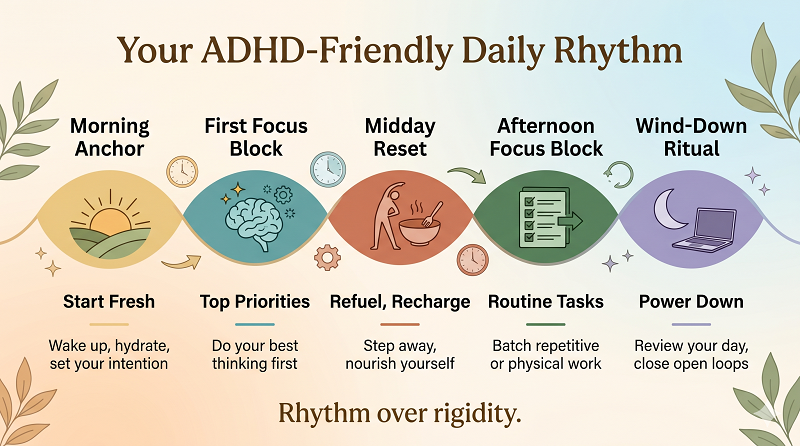
There is no single right answer. But here is a gentle framework to adapt to your own energy and nervous system:
- Morning Anchor: Begin with hydration before screens. Keep the first thirty minutes low-stimulation: no news, no email, no social media. A brief grounding ritual here can set the nervous system tone up on a steadier path for the rest of the day.
- First Focus Block: Start with your most cognitively accessible task, not necessarily your most important one. Use shorter intervals of 25 to 45 minutes with genuine breaks in between.
- Midday Reset: This is not optional. Nourishment, movement, and a sensory break at midday can help restore the resources spent during the morning. Skipping it is a loan against your afternoon.
- Afternoon Focus Block: Batch similar tasks together where possible. Reduce decision-making in this block; save creative and high-judgment tasks for your peak energy window.
- Wind-Down Ritual: Close your workday with a deliberate ending ritual. Write down the three most important things for tomorrow, then close tabs, silence notifications, and shift your environment. This can create a clear signal to the nervous system that the performance demand portion of the workday has ended.
If you want support designing a routine that accounts for your energy patterns and neurodivergent needs, Divine Empowerment Holistic Coaching includes one-on-one work to build approaches grounded in your real life, not a generic productivity template.
The Energy and Spirit Layer: Supporting the Whole Person
ADHD Focus Is Often an Energy Management Challenge
Set aside time management for a moment. Many ADHD-related focus challenges are also shaped by available mental energy: how quickly it can feel depleted and how poorly rigid systems account for fluctuating capacity within the nonlinear nature we exist in.
Tasks that rely heavily on executive functioning can require substantial cognitive effort for people with ADHD. Research on cognitive load and neurodivergence can help explain why the effort required to complete a task may not be obvious from the outcome alone.. Designing for energy means building genuine recovery into every day as structural necessity, not reward.
Self-Trust Changes Everything
Shame is a common experience for many adults with ADHD, particularly after years of struggling against expectations that did not account for how their brains work. Years of being told to try harder can sometimes create an internal narrative that attributes every struggle to personal failure.
That narrative is not the truth.
Stop fixing symptoms. Start supporting systems. Embracing your neurodivergent brain means beginning to trust what your body and energy levels actually tell you, not what productivity culture says you should be capable of at 2 PM on a Tuesday.
I am whole as I am.
That is not resignation. That is the foundation from which real, sustainable change becomes possible.
Mindfulness Without Forcing Meditation
Traditional meditation is one option. It is not the only one.
For ADHD brains, embodied presence often comes more naturally through movement, sensation, or ritual than through seated stillness. Mindfulness is not a posture; it is the quality of attention you bring to whatever you are doing.
A cup of tea drunk without your phone. A walk taken without earbuds. A moment of noticing what your hands feel like before you open your laptop. These are mindfulness practices. These are also nervous system practices. These small rituals are where clarity, balance, and growth take root inside a busy, neurodivergent life.
Frequently Asked Questions About ADHD Workspaces and Nervous System Support
What is the best workspace setup for someone with ADHD?
The best ADHD workspace setup reduces sensory overload and builds environmental predictability. Start with three adjustments: replace harsh overhead lighting with a warm-toned desk lamp, establish a single consistent work zone rather than rotating locations, and clear only your immediate work surface of visual clutter while using functional visibility elsewhere. A desk that looks messy to others may be exactly right for your brain if it keeps important items in sight.
Sensory grounding objects- a textured item, a warm mug of herbal tea, a soft background sound- can meaningfully support focus by giving the nervous system low-stakes sensory input to process while the mind works. There is no single universal setup. The goal is an environment that reduces the effort your brain has to spend just to feel regulated enough to begin.
Why does my ADHD brain struggle so much with transitions between tasks?
Transitions are one of the most consistent executive functioning challenges for ADHD brains. Shifting from one task to another requires the brain to disengage from one cognitive state and re-engage with another. Without a clear signal, the nervous system either stalls at the door of the next task or refuses to stop the current one entirely.
Transition rituals solve this by creating a conditioned cue, a bridge the nervous system learns to recognize. Something as simple as brewing a cup of tea before beginning a new work block, doing two minutes between tasks, or closing all open tabs from the previous block before starting the next one can provide the signal the brain needs. The ritual does not have to be elaborate. It has to be consistent.
How do I regulate my nervous system before trying to focus?
Nervous system regulation does not require a 30-minute meditation practice. For ADHD brains, shorter and more frequent regulation practices are almost always more effective than longer and infrequent ones.
Five options that may offer support in five minutes or less: box breathing (four counts in, hold, out, hold), the sensory grounding technique of naming five things you can see, four you can touch, three you can hear, two you can smell, and one you can taste, a brief movement reset like shoulder rolls or a two-minute walk, sixty seconds of visual rest with eyes closed or fixed on a still object, or a quick body scan from crown to feet to notice and gently release held tension.
Regulation comes first. Focus follows. Trying to focus your way out of dysregulation rarely works.
Can herbal tea actually help with ADHD focus?
Herbal teas are not a medical treatment for ADHD, and they are not a substitute for professional care or any prescribed treatment plan. With that said, the ritual of brewing and drinking herbal tea may offer meaningful nervous system support for some people navigating ADHD-related stress and overstimulation.
Certain herbs like chamomile, oat straw, and lavender have long been used in functional botanical blends for their traditionally calming properties. Some research suggests these herbs may support relaxation pathways for some individuals. The sensory act of brewing itself- warmth, scent, texture, the deliberate pause- interrupts the overstimulation cycle and brings attention inward. At LMH Custom Teas and Herbs, the chakra and calm blends collection is crafted with these principles in mind. Always consult your healthcare provider before adding herbal support if you are on medications, as some herbs may interact with prescriptions.
What is the difference between an ADHD routine and a rigid schedule?
A rigid schedule tells you exactly what to do at exactly what time, and punishes any deviation. A routine built for an ADHD brain provides consistent anchors and transition cues without demanding exact replication every day.
The key is rhythm over rigidity. Your morning anchor might be hydration and a grounding ritual before screens; it does not have to happen at 6:47 AM sharp. Your focus blocks might be 25 to 45 minutes; they do not need to fall at the same hour every day. What makes a routine sustainable for ADHD brains is the presence of reliable cues, not the precision of a time-blocked calendar.
Building your rhythm around your genuine energy patterns matters too. Many ADHD brains have peak cognitive windows that do not align with conventional 9-to-5 expectations. Designing around your actual energy is data-driven self-awareness, not laziness.
How does shame affect ADHD and focus?
Shame is one of the most under-discussed features of ADHD in adults, and one of the most disruptive. Years of being told to try harder, focus more, and get organized accumulate into an internal narrative that attributes every struggle to personal failure. That narrative is not the truth, but it shapes behavior in very real ways.
Shame activates the nervous system in ways that make focus harder, not easier. When the internal monologue is running on self-criticism, the brain is already partially dysregulated before the task begins. Building self-trust is not a soft or optional component of ADHD support; it is structural. The moment you stop fighting your brain and start building environments and rhythms that work with it, the internal energy cost of simply showing up begins to shift.
Where to Start
You do not need a perfect workspace, a flawless routine, or a completely regulated nervous system before you begin. You need one small shift that reduces friction for your specific brain.
Start with the layer that feels most within reach today. Maybe that is moving your desk lamp. Maybe it is adding a two-minute transition ritual between tasks. Maybe it is brewing a cup of something warm before you open your laptop and staying with that warmth for just a moment before the day begins.
If you are ready to build a more comprehensive approach that accounts for your neurodivergent needs, your nervous system, and your whole life, explore the services at LMH Custom Teas and Herbs, including Divine Empowerment Holistic Coaching and herbal support designed to meet you exactly where you are.
And if you want to begin with a sensory grounding ritual today, browse the handcrafted tea blends created for calm, centered rituals. Your nervous system already knows what it needs. Let us support it together.
Restore balance and harmony in your mind, body, and spirit, one ritual at a time.
Disclaimer: I am a Certified Coach and Reiki Master; I am not a certified herbalist, licensed medical doctor, or pharmacist. The botanical suggestions, tea profiles, and lifestyle rituals offered on this website and during coaching sessions are for educational and informational purposes only. They have not been evaluated by the FDA and are not intended to diagnose, treat, cure, or prevent any medical condition. I only work with low-risk, culinary, and gentle botanical ingredients. While we charge an advanced assessment premium to meticulously cross-reference your lifestyle plans against any disclosed medications or underlying health conditions, this process is an educational safety check, not a medical review. Always consult your primary healthcare physician before introducing new plants, foods, or supplements into your routine, especially when taking prescription drugs.